AI và Đạo đứcđăng vào 20 thg 10, 2025
Bản Quyền và Nội Dung AI Tạo Ra

The Copyright Question
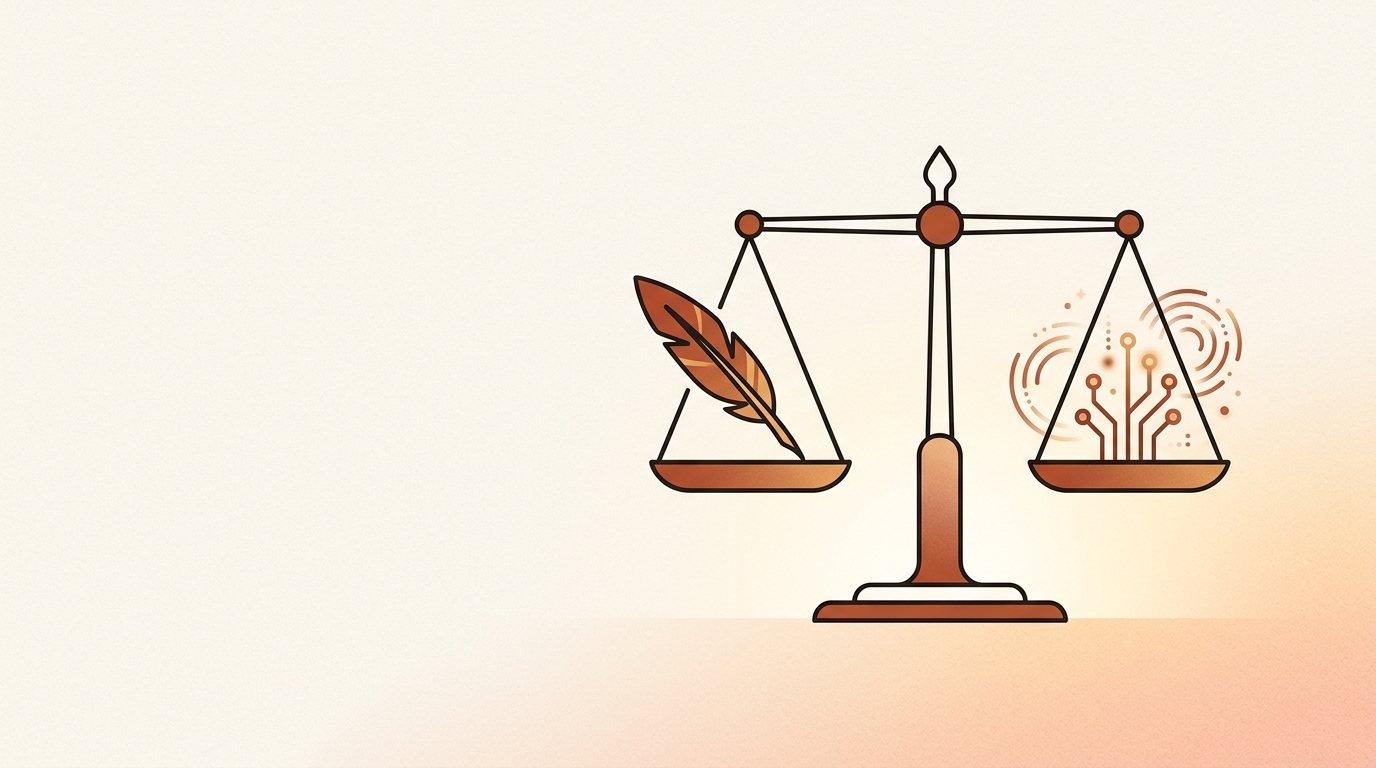
As AI-generated content becomes increasingly sophisticated, fundamental questions about ownership and copyright have emerged. Traditional copyright law was designed for human creators, leaving significant uncertainty about how it applies to AI outputs.
Current Legal Landscape
Human Authorship Requirement
In most jurisdictions, copyright protection requires human authorship. The U.S. Copyright Office has consistently held that works created entirely by AI without human creative input cannot be copyrighted. However, the boundaries become blurry when humans use AI as a tool in the creative process.
Key Legal Principles
- Pure AI Output: Generally not copyrightable without significant human creative input
- AI-Assisted Creation: May be copyrightable if human creativity is sufficiently involved
- Prompts and Curation: The role of human prompts in copyright claims remains unsettled
Who Owns AI-Generated Content?
Possible Ownership Scenarios
- The User: The person who prompted or directed the AI
- The AI Developer: The company that created the AI system
- No One: The content enters the public domain
- Shared Ownership: Rights divided among contributors
Terms of Service Matter
Most AI platforms address ownership in their terms of service. Before using any AI tool commercially, carefully review:
- Who retains rights to generated content
- Whether commercial use is permitted
- Any licensing requirements or restrictions
- Indemnification clauses
Risks for Content Creators
1. Infringement Concerns
AI models are trained on existing content, potentially including copyrighted works. This raises questions about whether AI outputs might infringe on the rights of original creators.
2. Lack of Protection
If your AI-generated content isn't copyrightable, competitors may freely use it without permission or attribution.
3. Disclosure Requirements
Some platforms and contexts may require disclosure of AI involvement, affecting how content can be marketed or sold.
Best Practices for Creators
Document Your Process
- Keep records of your creative input and decision-making
- Save prompts, iterations, and editing history
- Document the human creativity involved in the final work
Add Substantial Human Input
- Use AI as a starting point, not the final product
- Edit, refine, and transform AI outputs significantly
- Incorporate original creative elements
Stay Informed
- Follow legal developments in AI and copyright
- Consult with intellectual property attorneys when needed
- Update practices as laws and guidelines evolve
The Future of AI and Copyright
Lawmakers and courts worldwide are grappling with these issues. We may see:
- New categories of protection for AI-assisted works
- Clearer guidelines on the level of human input required
- International harmonization of AI copyright rules
- New licensing frameworks for AI-generated content
Conclusion
The copyright landscape for AI-generated content is still evolving. By understanding current principles, documenting your creative process, and adding substantial human input, you can better protect your work while navigating this uncertain terrain.
Hãy thử Trình phát hiện AI và AI Humanizer của StealthWrite để áp dụng những ý tưởng này vào thực tế.
Chia sẻ
Bài viết liên quan
AI và Đạo đức
Hiểu rõ tầm quan trọng của tính minh bạch AI và cách công khai phù hợp giúp xây dựng lòng tin với độc giả.
8 thg 12, 2025
AI và Đạo đức
Hướng dẫn toàn diện để giải quyết các thách thức đạo đức trong đổi mới AI trong khi vẫn duy trì các thực hành có trách nhiệm khi sáng tạo nội dung.
8 thg 12, 2025
AI và Đạo đức
Với sự lan rộng của các công cụ phát hiện AI, các câu hỏi đạo đức quan trọng nảy sinh.
12 thg 10, 2025